

Model for Advancing Performance Strategies (MAPS)
Bringing together context, culture, and process improvement
to make practical changes that fit the real-world setting.
What NIATx MAPS Delivers
NIATx MAPS is an integrated framework that helps organizations improve systems, services, and outcomes.
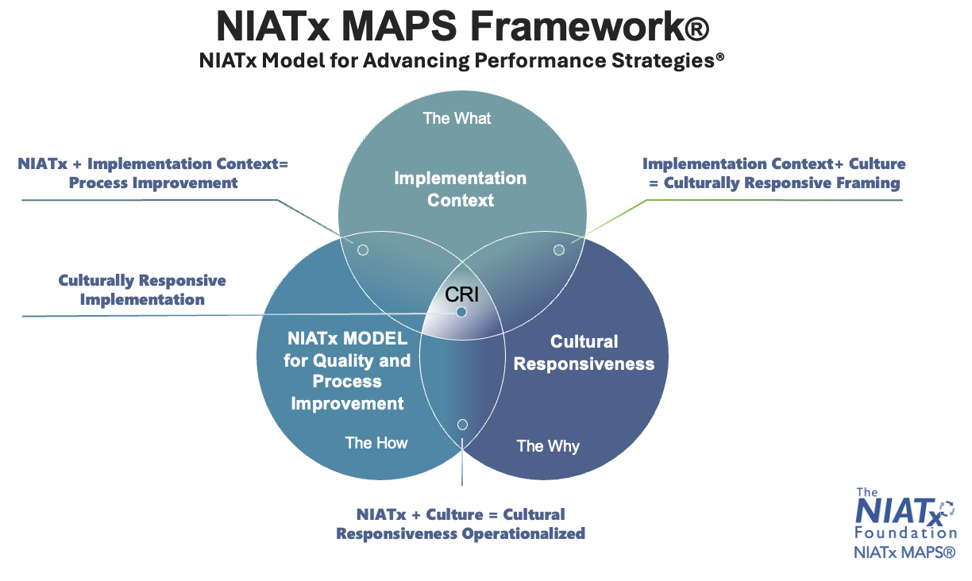
It brings together process and quality improvement, cultural responsiveness, and implementation context to align change efforts with the unique realities of each individual organization.
In essence, NIATx MAPS helps organizations understand who they are serving, what needs to improve, and how to make practical changes that fit the real-world setting.
At its core, the NIATx Improvement Model serves as the engine for change—emphasizing rapid testing, continuous learning, and measurable results. NIATx MAPS strengthens that model by ensuring strategies are culturally responsive and grounded in the realities of the organization, including workforce, systems, and external pressures that influence success.
NIATx MAPS brings together context, culture, and process improvement so organizations can turn data and community understanding into measurable change.
Process & quality improvement
Cultural responsiveness
Implementation context
Experienced third-party perspective
Ultimately, MAPS helps organizations improve access, engagement, quality, and outcomes
through cultural responsiveness and practical, measurable change:
Identify priority areas such as access, retention, and quality of care.
Align improvement strategies with the cultural and community needs of clients.
Select the right level of support—from foundational guidance to intensive, hands-on assistance for complex system change.
Implement changes that are effective, sustainable, and responsive to the people you serve.
How It Works
NIATx MAPS begins with a structured intake process that helps organizations define improvement priorities, identify the cultural and operational factors that influence success, and match support to their goals, readiness, and context.

Step 1: WHAT
The organization identifies what they are trying to improve. This step focuses on accurately describing the implementation context, including where the work occurs and what outcomes matter most.
Step 2: WHY
The organization identifies the cultural conditions that influence whether improvement efforts will be effective. Organizations also select the appropriate technical assistance (TA) level, which determines the depth and intensity of support.


Step 3: HOW
The organization determines how to implement process changes. Some organizations need a full NIATx MAPS team to support foundational skill-building, shared understanding of the field and setting, and practical application of improvement methods. Others need targeted support with deep expertise in process and quality improvement and cultural responsiveness to complement internal capacity.
Support is flexible. The goal of NIATx MAPS is to provide the right level of guidance to help teams move improvement work forward and sustain results. Importantly, NIATx MAPS treats cultural responsiveness as a condition for success to ensure services are relevant, engaging, and effective for the populations the organization serves. At the same time, it grounds improvement efforts in the organization’s realities, including staffing, systems, and external pressures that affect implementation and sustainability.

Why NIATx MAPS
NIATx MAPS helps organizations make change practical, culturally responsive, and sustainable. It provides a clear framework, expert support, and realistic path to stronger services and better outcomes.
Ready to improve access, strengthen engagement, and deliver better outcomes? Schedule a consultation with the NIATx Foundation to explore how NIATx MAPS can support your organization.